

Indoor cricket bowling machines are a game-changer for players looking to improve their batting skills in confined spaces. These machines offer consistent deliveries, simulate various bowling styles, and cater to different skill levels. Choosing the right machine can elevate your practice sessions, but it depends on key features like speed control, spin and swing simulation, portability, power options, ball compatibility, and safety features.
Key Features at a Glance:
- Speed Control: Adjustable speeds for tailored practice, from slow deliveries to match-level intensity.
- Spin & Swing Simulation: Machines with dual-wheel systems to replicate spin and swing for realistic training.
- Portability: Compact, lightweight designs with foldable frames and wheels for easy storage and movement.
- Power Options: Battery-powered models for mobility or mains-powered for reliable operation.
- Ball Compatibility: Options for tennis, synthetic, or leather balls, depending on skill level and safety needs.
- Safety Features: Protective shields, interlock switches, and enclosed housings to reduce risks in tight spaces.
- Ease of Maintenance: Simple controls and accessible components for hassle-free upkeep.
Whether you’re a beginner or an advanced player, selecting a machine that aligns with your needs and indoor space ensures effective and consistent training. Read on to explore each feature in detail and find the perfect machine for your indoor cricket practice.
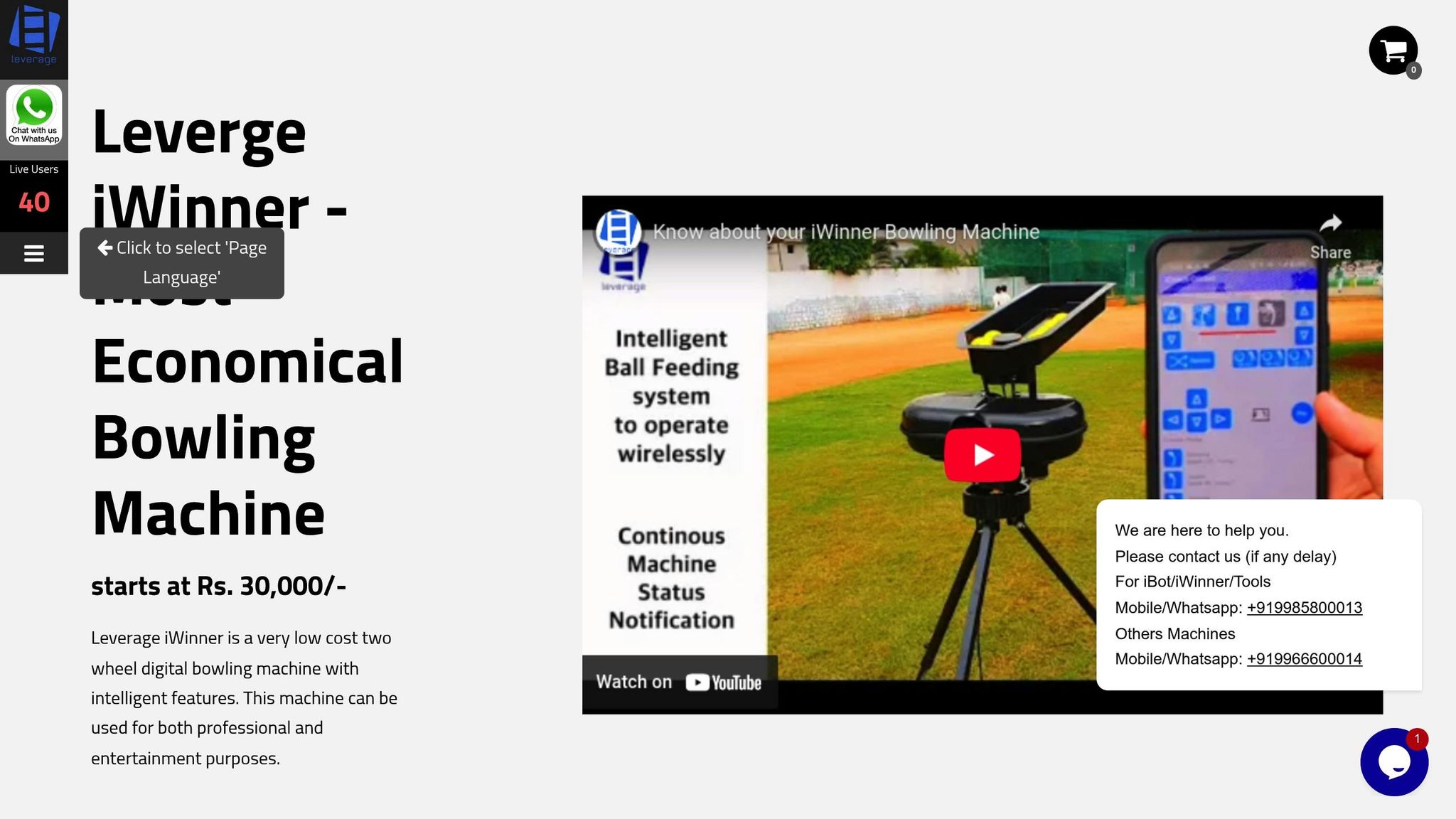
The Cricket Bowling Machine You Can Afford On A BUDGET | Leverage iWinner Review | Cricket Equipment
1. Speed and Delivery Control
Controlling speed is a key feature of any indoor cricket bowling machine. It allows players to gradually develop their batting skills, starting with slower, manageable deliveries and progressing to match-level intensity. Fine-tuning the speed also helps create realistic training conditions by simulating spin and swing.
Top-tier machines ensure consistent speeds with every ball, which is crucial for building rhythm and muscle memory. On the other hand, machines with fluctuating speeds can throw off a player’s timing and slow down improvement.
Features like digital displays and memory settings make it easy to monitor and switch between different practice scenarios. Adjustable delivery intervals also add variety, mimicking real-game situations.
For indoor settings, speed adjustments are especially useful. They help keep ball trajectories low, minimizing the chance of hitting the ceiling. Plus, the ability to quickly change speeds ensures seamless and efficient practice sessions.
2. Spin and Swing Simulation
Once speed control is mastered, the next step toward creating a realistic training experience is replicating the intricate movement of the ball through spin and swing. These elements are what separate basic machines from advanced ones. Machines capable of mimicking spin bowling and swing deliveries bring practice sessions closer to actual match conditions, challenging batsmen to interpret ball movement just as they would against live bowlers. This lays the groundwork for the technical aspects we’ll explore here.
Creating consistent spin without compromising accuracy is no easy feat. High-end machines tackle this by using dual-wheel systems with independently adjustable speeds. By setting one wheel to rotate faster than the other, the machine generates the spin effect. The greater the speed difference between the wheels, the sharper the turn off the pitch.
To simulate off-spin and leg-spin, the machine’s wheel configuration and release angles need to be adjusted. Top-tier machines often come with preset modes for these variations, allowing players to fine-tune spin intensity. Switching between off-spin and leg-spin during practice sessions sharpens a batsman’s ability to quickly identify and respond to different types of deliveries – an essential skill in competitive cricket.
Swing simulation, on the other hand, introduces an even higher level of complexity. Swing depends heavily on the ball’s seam position and air conditions, which machines replicate mechanically. Some machines achieve this by using angled releases to create lateral movement in the air, while others rely on specialized grips that manipulate airflow around the ball.
For indoor practice, where natural swing conditions are absent, controlled swing becomes especially important. Machines that can produce both conventional swing (early movement away from the batsman) and reverse swing (late movement back toward the batsman) offer a well-rounded preparation for outdoor matches.
While it might be tempting to focus on extreme variations, consistent movement patterns are often more beneficial for skill-building. A machine that delivers a steady amount of spin or swing allows batsmen to systematically work on their footwork and shot selection. Random variations, though closer to real-life bowling, can disrupt focused training efforts.
The best machines combine movement with variations in flight path, simulating realistic bowling scenarios. This forces batsmen to judge the ball’s length while also accounting for lateral movement, making indoor training sessions more dynamic and effective.
3. Portability and Compact Design
Indoor facilities often come with space constraints, making portability a top priority when it comes to equipment. This demand for mobility shapes the features that make these machines practical and user-friendly.
A machine that’s both stable during use and lightweight enough to maneuver easily through tight spaces strikes the perfect balance for indoor settings.
Features like folding mechanisms, collapsible frames, and built-in wheels make storage and repositioning hassle-free. This is especially useful in shared spaces where equipment needs to be moved frequently.
Compact designs with quick setup options save precious time, allowing more focus on training in environments where every minute counts.
Vertical storage or wall-mounted solutions help clear floor space, keeping the area organized and efficient.
A small footprint ensures that batting areas remain unobstructed while still delivering effective bowling simulations.
For coaches juggling multiple facilities, foldable and lightweight machines provide the flexibility needed to adapt to different spaces with ease.
Battery-powered models further enhance portability by eliminating the need for power outlets, giving users more freedom to position the machine wherever it works best.
Additionally, quick-release adjustments allow for fast changes to height or angle, catering to the needs of different players during fast-paced practice sessions. This adaptability ensures smoother and more effective indoor cricket training.
4. Power Options: Battery vs. Mains
When it comes to choosing between battery-powered or mains-powered machines, the decision significantly impacts how and where you can use your equipment. Your choice here directly influences both mobility and placement flexibility.
Battery-powered machines are all about freedom. They allow you to practice or work without being tied to a power outlet, which is especially handy in areas with limited access to electricity or sparse outlets. This makes them a top choice for those who value portability and versatility.
On the other hand, mains-powered machines demand proximity to a power source. They often require extension cords, which can limit where you set up your machine. However, they are reliable in spaces with consistent and accessible electricity.
Here’s a quick comparison:
| Power Type | Mobility | Flexibility |
|---|---|---|
| Battery-powered | Highly mobile – use it virtually anywhere | No need for nearby outlets |
| Mains-powered | Limited – tethered to power sources | Requires access to electricity |
If portability and ease of setup are priorities, battery-powered machines are the way to go. But if you’re working in a space with dependable power outlets, mains-powered machines can be a reliable option.
sbb-itb-3e44755
5. Ball Compatibility and Material
The type of balls your machine uses plays a big role in both the quality of practice and the safety of your indoor setup. Machines are typically designed for specific ball types, and using the wrong ones can damage your machine or even your indoor space.
Tennis balls are a popular option for indoor bowling machines. They’re soft, lightweight, and significantly reduce the risk of injury or damage to property. Most entry-level machines are compatible with tennis balls, making them an excellent pick for beginners. Plus, their softer impact means less strain on your machine’s internal parts.
Leather cricket balls are ideal for replicating match conditions, offering authentic weight and bounce. However, they demand machines with sturdy construction and higher power capabilities. Keep in mind, though, that leather balls used indoors can pose serious risks – they can easily damage walls, ceilings, and fixtures if mishandled.
Synthetic balls offer a balance between the softness of tennis balls and the authentic feel of leather ones. Made from rubber or composite materials, they mimic the weight and bounce of leather balls while being safer for indoor use. These balls are a great fit for mid-range machines. Additionally, some machines are compatible with dimpled balls, which fall somewhere between soft and hard balls in terms of weight and impact, making them another versatile option for indoor practice.
When choosing balls for indoor use, take ceiling height into account. Tennis and synthetic balls are more forgiving if they hit ceilings – especially common in spaces with standard 10- to 12-foot heights. Leather balls, on the other hand, can cause significant damage in such scenarios.
Durability is another factor to weigh. Tennis balls tend to wear out quickly with heavy use, while leather balls are much longer-lasting but come with a higher price tag. Synthetic balls, however, strike a good balance between durability and cost, making them a practical choice for regular indoor sessions.
| Ball Type | Safety Level | Durability | Cost per Ball | Best For |
|---|---|---|---|---|
| Tennis balls | High | Low | $2–$4 | Beginners, low ceilings |
| Synthetic balls | Medium | Medium | $8–$15 | Regular practice |
| Leather balls | Low | High | $25–$40 | Advanced training |
Before buying balls, always check your machine’s specifications. Ensuring the correct size and weight compatibility will prevent damage and keep your warranty intact.
6. Safety Features for Indoor Use
When using bowling machines indoors, safety should be a top priority. The confined spaces and proximity to walls increase the risks of ricochets and accidental contact. Here are some key safety features designed to protect both users and equipment.
Protective shields and warning signals are essential for indoor use. These shields help prevent accidental contact with moving parts, while warning signals alert users before a ball is launched. Many machines also offer optional add-ons for these features, providing an extra layer of safety for indoor environments.
Machines with sturdy, enclosed housings and fixed guards provide another level of protection. These designs shield motors and drive mechanisms, reducing the risk of injury and protecting the machine’s internal components. By preventing accidental access during operation, they help ensure a safer experience in tight spaces.
Interlock switches are another critical safety measure. These switches automatically cut power to the machine if access covers or guards are opened. This feature ensures the machine remains inactive while internal parts are exposed, preventing potential accidents during maintenance or adjustments.
| Safety Feature | Purpose | Benefit |
|---|---|---|
| Protective shields | Prevents contact with moving parts | Critical for confined spaces |
| Interlock switches | Cuts power when covers are opened | Prevents operation during exposure |
| Fixed guards | Shields motors and drive mechanisms | Reduces risks from moving components |
For maximum safety, combine these features with proper machine setup and a clear understanding of operational guidelines. Indoor use requires extra care, but these measures can significantly reduce risks.
7. Ease of Maintenance and Controls
After safety, maintenance plays a key role in ensuring a machine’s longevity and consistent performance. A well-designed indoor cricket bowling machine should be easy to operate and require minimal upkeep. This allows you to focus on practice rather than dealing with technical issues.
Look for machines with clearly labeled buttons and simple controls to make setup quick and hassle-free. The easier it is to get started, the more likely you are to use the machine regularly.
Keeping key components accessible is essential for long-term usability. For instance, cleaning the ball guide track regularly helps prevent performance issues. If residue builds up between the wheels, make sure the machine is turned off before using a scraper or putty knife to remove it.
Proper storage also matters. Keep the machine in a clean, dry space, away from extreme temperatures or dampness. Avoid placing it on its plastic lid, and always secure all three legs before moving it to prevent any damage.
Routine maintenance should be simple and straightforward. Apply a small amount of light grease to lubrication points like leg clamps and ball joint spindles for smooth operation. High-quality machines are often designed to eliminate the need for internal adjustments, with no user-serviceable parts inside the control panel.
For battery-powered models, follow safe charging practices. Charge the battery in a well-ventilated area to allow gases to escape, and keep it away from sparks or open flames during charging.
The best machines strike a balance between advanced features and ease of use, allowing players to focus fully on improving their skills. This streamlined maintenance approach enhances the machine’s overall functionality, making it an ideal choice for indoor practice.
General maintenance tips based on industry best practices.
Comparison Table
The table below highlights how different types of bowling machines handle various ball types – an important consideration for safe indoor practice.
| Feature | Entry-Level Machines | Mid-Range Machines | Professional Machines |
|---|---|---|---|
| Ball Compatibility | Soft foam balls only | Soft foam & lite balls | Soft foam, lite, and regulation-sized balls |
Each machine type works best with specific balls, ensuring safety and performance. For entry-level machines, Heater Sports Slider Soft Foam Balls are a great choice. Weighing just 1.9 oz (about half the weight of standard baseballs), their optic orange dimpled design makes them safe and easy to track during practice.
Mid-range machines are compatible with Heater PowerAlley Lite Baseballs, which weigh 2.1 oz. These provide a more realistic feel while maintaining safety for indoor use.
Professional machines, on the other hand, can handle the full range of ball types. This includes Heater Yellow Dimpled Baseballs, which are regulation weight and made from tough polyurethane. These balls offer the closest experience to actual match conditions, making them ideal for advanced training.
Conclusion
Selecting the right indoor cricket bowling machine comes down to matching its features with your training objectives. Whether you’re a beginner honing the basics or an experienced player sharpening your response to different deliveries, the machine should meet both your skill level and the constraints of your practice space.
Key features like speed control and delivery variety are essential. Machines that mimic different bowling styles – ranging from medium pace to fastballs or spin – provide the flexibility needed to elevate your game.
Safety is especially important for indoor use. Machines designed for softer, foam balls are a safer choice, while those that handle standard cricket balls should be built to withstand the impact and ensure durability.
Portability and power options also influence how practical the machine is for regular use. A lightweight, battery-operated model that’s easy to set up can encourage frequent practice sessions. On the other hand, a larger, stationary machine might be less convenient and limit how often you train.
Ultimately, choose a machine that suits your skill level and fits your space. A straightforward, regularly used machine often delivers better results than a more advanced model that gathers dust. These considerations can help you create a consistent and effective training routine, no matter your experience level.
FAQs
How do indoor cricket bowling machines replicate different bowling styles like spin and swing?
Indoor cricket bowling machines rely on sophisticated mechanical and electronic systems to replicate different bowling styles. For spin deliveries, the machine modifies the ball’s rotation, producing the drift and turn you’d expect when the ball hits the pitch. To mimic swing, it adjusts the release angle, speed, and airflow, recreating the ball’s movement through the air.
These capabilities let players train against a diverse range of deliveries, sharpening their skills and refining their techniques in a consistent indoor setting.
What safety precautions should you take when using a cricket bowling machine indoors?
When using a cricket bowling machine indoors, making safety your top priority is essential. Start with protective gear like helmets, face guards, and pads to reduce the risk of injuries. Adding protective screens is another smart way to create a safer environment.
It’s crucial to have someone trained in operating the machine. Follow the manufacturer’s safety guidelines closely and adjust speed and spin settings carefully to match the indoor space. Avoid using excessive force that could lead to accidents. Regularly inspecting and maintaining the machine is also key to ensuring everything runs smoothly. Taking these steps will help create a safer and more enjoyable indoor cricket experience for everyone involved.
What’s the difference between battery-powered and mains-powered bowling machines for indoor cricket practice?
Battery-powered bowling machines are a fantastic option for indoor cricket practice, especially when portability is a priority. Since they don’t need to be plugged into a power outlet, you can use them in a variety of locations, even in spots where electricity isn’t easily accessible. Most models run for about 3–4 hours on a single charge, offering enough time for a productive practice session without being tied down.
On the flip side, mains-powered machines are ideal for permanent indoor setups where a steady power source is readily available. While they lack the portability of their battery-powered counterparts, they deliver consistent, uninterrupted performance, making them a solid choice for dedicated practice spaces that don’t require frequent relocation.