
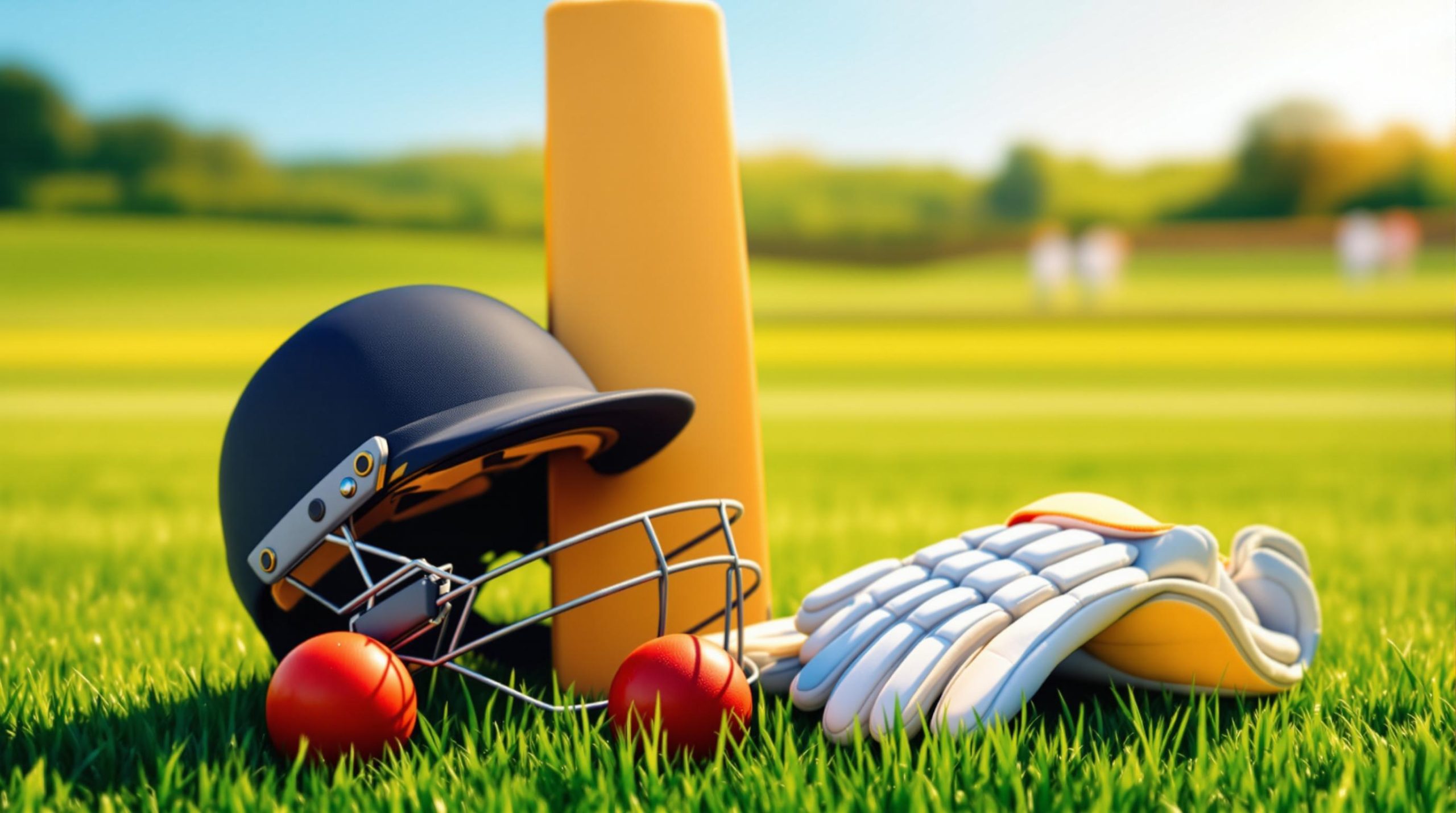
Getting started with cricket is simple if you have the right gear. Here’s a quick checklist of essentials for beginners:
- Bat: Choose a lightweight Kashmir willow bat for ease of use.
- Protective Gear: Helmet, batting gloves, leg guards, and abdominal guard for safety.
- Clothing: White cricket trousers, shirt, and proper cricket shoes with grip.
- Balls: Use sponge or rubber balls for practice, and leather balls for matches.
- Bag: A medium-sized duffle or shoulder bag to carry your gear.
Focus on essential items first, and ensure your equipment fits well for comfort and safety. Ready to dive deeper? Keep reading for detailed buying tips and care instructions.
Required Cricket Equipment List
Batting Equipment
A Kashmir willow bat is a solid choice for its light weight, durability, and affordability . Make sure to pick one that suits your height and playing style for better balance and control .
Safety Gear
Staying safe while playing is crucial. Here’s an overview of the essential protective gear:
| Equipment | Purpose | Key Features |
|---|---|---|
| Cricket Helmet | Protects the head | Meets safety standards, offers a secure fit |
| Batting Gloves | Shields the hands | Padded design ensures a firm grip |
| Leg Guards | Covers the shins | Hard outer shell with soft inner padding |
| Abdominal Guard | Protects the core | A must-have for all players |
Clothes and Shoes
Your clothing and footwear can make a big difference in comfort and performance. Essentials include:
- White cricket trousers
- White cricket shirt
- Cricket shoes with strong grip
- Breathable undergarments
Choosing Cricket Balls
The type of ball you use depends on whether you’re practicing or playing a match. Here’s a breakdown:
- Practice Balls: Sponge balls are great for building skills .
- Training Balls: Options like the "Swing Master" or "Spinner Ball" help refine specific techniques .
- Match Balls:
- Red balls for Test matches
- White balls for limited-overs games
- Pink balls for day-night matches
For practice, consider using lower-grade leather or synthetic balls that mimic match conditions without breaking the bank . Brands like Kookaburra (Australia), Dukes (England), and SG (India) offer options in various quality levels .
You can also explore additional gear to enhance your cricket kit as needed.
Extra Equipment Options
Equipment Bags
Choosing the right cricket bag is essential for keeping your gear organized and easy to transport. Today’s cricket bags come in various styles, designed for different needs and skill levels.
| Bag Type | Best For | Key Features |
|---|---|---|
| Wheelie Bags | Professional players | High capacity, wheels, multiple compartments |
| Duffle Bags | Recreational players | Lightweight, shoulder straps, ample storage |
| Shoulder Bags | Beginners | Compact, lightweight, basic storage |
| Wheelie Duffle | Regular players | Hybrid design with wheels and convertible straps |
For those just starting out, a medium-sized shoulder or duffle bag is a great choice. It offers enough room for essential gear while being easy to carry. Look for features like ventilated compartments to avoid odor and reinforced stitching for added durability .
Extra Protection
Adding extra protective gear can enhance both safety and confidence on the field. Here are some options to consider based on your playing style:
| Protection Item | Price Range | Recommended For |
|---|---|---|
| SG ACE Arm Guard | $14.99 – $19.99 | Fast bowling practice |
| Cricket Batting Chest Guard | $28.05 – $35.25 | All batsmen |
| Kookaburra Pro Guard 500 | $65.05 – $74.05 | Professional players |
Practice Equipment
Specialized training gear is key to improving your skills. For example, the SG iBall (hanging ball) is priced at $12.99 and is excellent for refining batting technique and hand-eye coordination . For wicket practice, the CE Cricket Stumps Set with spring returns, available for $65.00, offers durability and convenience .
When it comes to training balls, you have several options:
- Rubber balls: Long-lasting and safe for practice.
- Foam balls: Perfect for indoor sessions.
- Hanging balls: Great for solo batting practice.
- Standard leather training balls: Mimic real match conditions .
Next, we’ll explore key factors to consider when finalizing your cricket kit.
Buying Guide
Purchase Considerations
Choosing the right cricket gear can improve your performance and save you money in the long run. If you’re just starting out, it’s smart to focus on the basics while balancing quality and cost.
Here’s a helpful size guide to ensure your equipment fits properly:
| Equipment Type | How to Measure | Size Range |
|---|---|---|
| Cricket Bat | Height & Age | Size 1 (4-5 years) to Full Size (15+ years) |
| Batting Pads | Knee to Ankle | 30cm (Small Boys) to 48cm (Large Mens) |
| Batting Gloves | Wrist to Fingertip | 6.5" (Small Boys) to 8.875" (Large Mens) |
| Helmet | Head Circumference | 51-52cm (Small Boys) to 60-62cm (Large Mens) |
Make sure the gear you pick fits comfortably, meets safety requirements, and aligns with your skill level and how often you play.
Once you’ve figured out what you need, consider checking out different shopping options to find the best deals and expert guidance.
Shopping Options
When it comes to buying cricket equipment, there are several options available, each with its own perks:
| Retailer Type | Advantages | Considerations |
|---|---|---|
| Local Sports Stores | Try gear in person, immediate purchase | Smaller inventory, higher prices |
| Specialist Cricket Shops | Expert recommendations, quality products | May not be nearby |
| Online Retailers | Competitive prices, huge variety | Can’t test before buying |
All Rounder Cricket, established in 2011, is a well-known retailer for cricket gear, serving players in the USA, Canada, and Australia. They’re praised for their large inventory and strong customer service .
For online shopping, Top Cricket Store is highly rated, boasting a 5.0/5 score from 540 customer reviews . Cricket bats can range from under $200 for beginners to over $500 for professionals .
Shopping Tips to Keep in Mind:
- Compare prices and take advantage of seasonal discounts.
- Double-check return policies, especially for online purchases.
- Read customer reviews to gauge product quality.
- Seek advice from experienced players or store experts if you’re unsure.
sbb-itb-3e44755
Learn the Equipment Used for Batting
Equipment Care Guide
Taking care of your cricket gear is essential for better performance, a longer lifespan, and safety. Here’s a detailed guide on how to clean and store your equipment properly.
Storage and Cleaning
Cricket Bat Care: Keep your cricket bat in a cool, dry spot, away from direct sunlight .
Here’s a breakdown of maintenance tips for various cricket equipment:
| Equipment Type | Cleaning Method | Storage Requirements | Maintenance Frequency |
|---|---|---|---|
| Cricket Bat | Wipe with a dry cloth and apply linseed oil (avoid the splice) | Store in a cool, dry place with a bat cover | Clean after each use; oil as needed |
| Protective Pads | Wipe with a damp cloth and air dry | Keep in a well-ventilated area | Clean after each use |
| Batting Gloves | Gentle hand wash and air dry | Store in a cool, dry place | Clean after each use |
| Helmet | Wipe with a mild detergent solution and dry thoroughly | Keep in a protective bag | Inspect before each use |
| Cricket Balls | Keep dry | Store in original packaging in a cool, dark place | Inspect before use |
Bat Maintenance: Apply a thin coat of linseed oil to the bat’s face, edges, and toe. Avoid the splice area to prevent damage .
Protective Gear Care: After every game, clean pads, gloves, and helmets with a damp cloth, then air-dry them completely. Regular inspections are also important .
Cricket Ball Storage: Properly store cricket balls to maintain their shape and quality. According to The Sports Ball Shop:
"Prior to use you should store the balls in a cool dark place. Try not to expose the ball to extreme temperatures, as this can sometimes crack the leather. Good quality balls are hand finished and are either wrapped in tissue or are placed in blister packs. Try to keep the balls in the original packaging until it is time to use them."
Next Steps
Once your equipment is in good shape, it’s time to focus on improving your skills through targeted practice and getting involved with a local club. Make sure your gear fits properly to maintain both comfort and performance .
Practicing with tennis balls is a great way to sharpen your technique. Cricket coach Andrew Beaven suggests an effective drill:
"Play a game where the only scoring strokes allowed are in the V, and the players will start to adapt. Even if the bowling is a little wayward, batters will be encouraged to adjust their position at the crease (side-to-side) if they are to hit wider deliveries straight back past the bowler."
Look into nearby clubs that are beginner-friendly. Many offer programs tailored to different age groups, including junior teams and casual matches, which are ideal for newcomers .
Practice Ideas for Quick Sessions
- Work on basic batting techniques using tennis balls.
- Practice wearing and moving in your protective gear.
- Partner up for throwdown drills.
- Play small-sided games that focus on proper form and technique.